Grow journal · July 20, 2026
Week 1 — Two Monsteras in Jars
Rooting a green Monstera and a variegated one side by side, and what the difference between them is already showing.
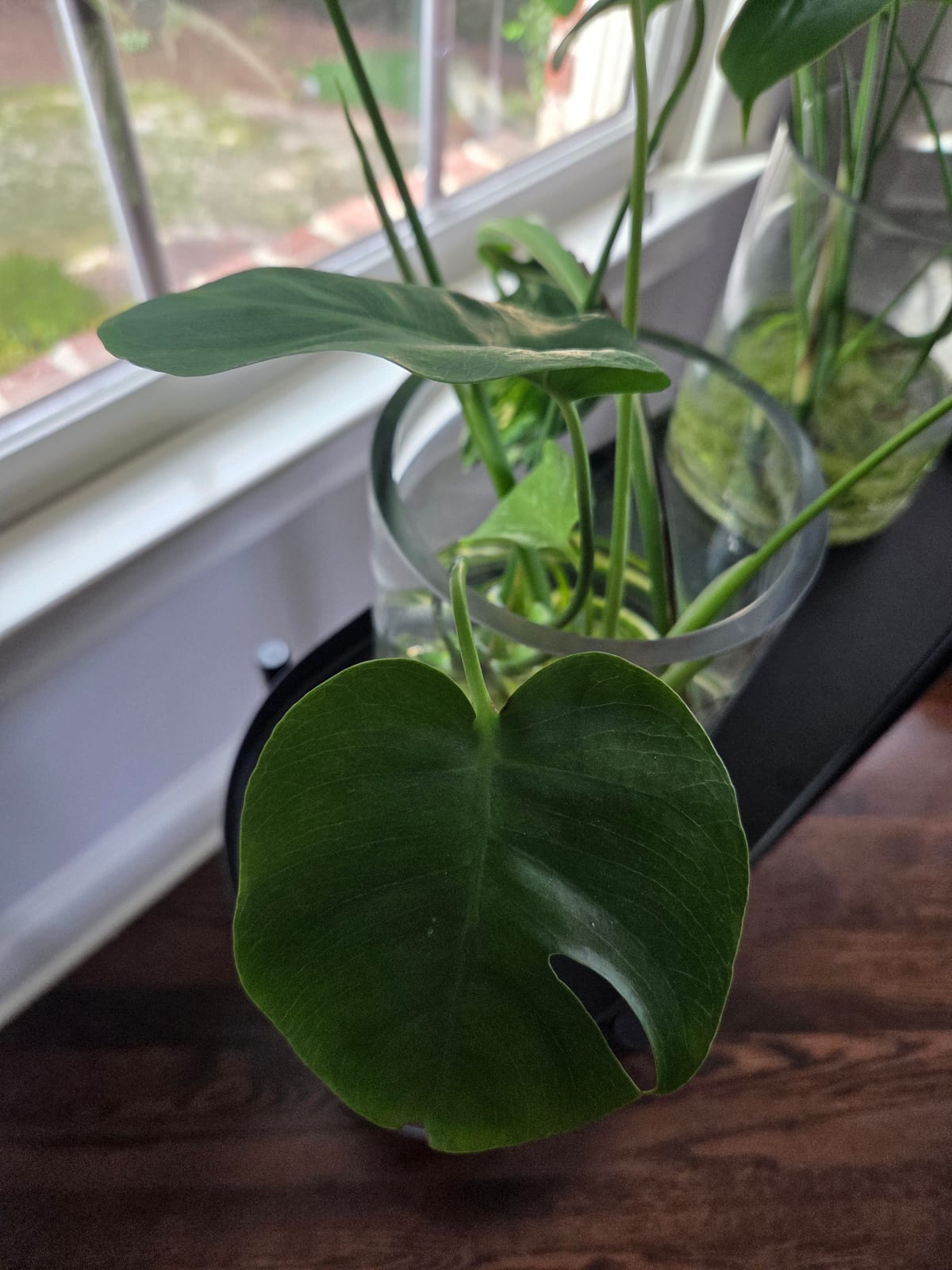
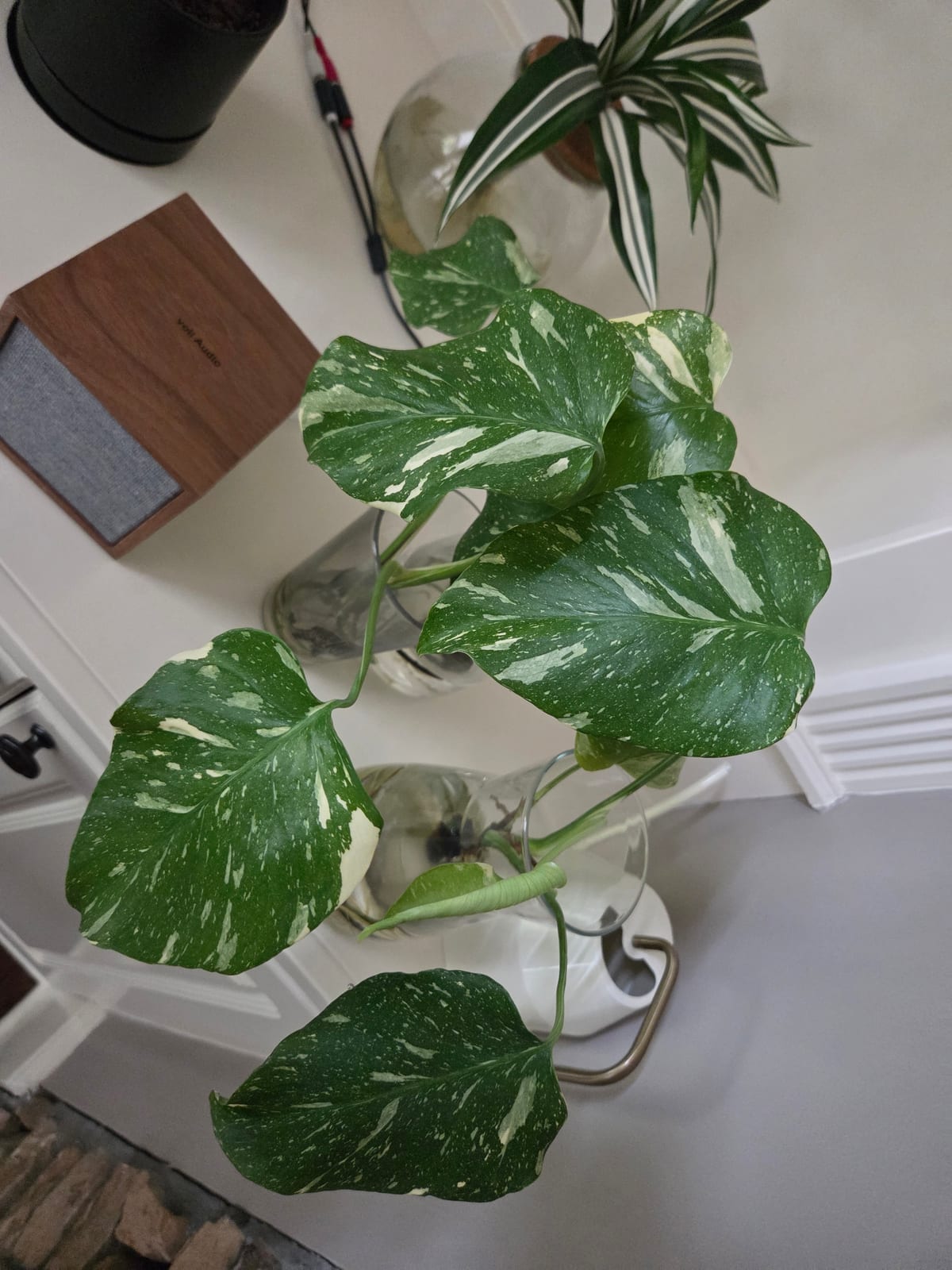
There are two jars on the shelf. One holds a cutting of plain green Monstera deliciosa. The other holds a variegated cutting. They went into water within a day of each other, from the same kind of node, under the same light.
They are not doing the same thing.
Why run them side by side
It would be easier to root only the plant that’s worth money. But a variegated cutting on its own gives you no reference — if it’s slow, you don’t know whether it’s the variegation, the light, the water, or you.
The green one is the control. Whatever it does is “normal for this shelf.” Any difference in the variegated jar is the variegation talking.
What variegation actually costs
White tissue has no chlorophyll. It doesn’t photosynthesize, but the plant still has to build it, keep it alive, and defend it. A cutting with heavy variegation is running the same job on a fraction of the engine — and it’s doing it with no roots yet, on stored energy alone.
In practice that means the variegated cutting roots slower, and it has a much smaller margin before a mistake becomes fatal. The green one shrugs off a bad week. The variegated one doesn’t.
This is the honest reason variegated plants cost what they cost. It isn’t scarcity theater. It’s that a meaningful share of them simply don’t make it.
Why water, and why that isn’t the finish line
Water rooting gets a lot of criticism, and some of it is fair: water roots are structurally different from soil roots. They’re thinner, more brittle, and adapted to an environment they’re about to leave. A cutting moved straight from a jar into a pot often stalls for weeks while it grows a second, different root system.
We use water anyway, for one reason — you can see everything. No guessing whether a node is rotting under the substrate. For a first propagation, that visibility is worth more than the transition cost.
But it means the jar is the beginning, not the end. The plan for both cuttings:
- Root in water until roots pass roughly 5 cm
- Move to a chunky substrate while the roots are still adaptable
- Grow on for about a month, unbothered
- Only then is it a plant we would put a price on
Where this goes
The variegated Monstera is most likely the first plant this project ever sells. It’s also the one most likely to fail. Both of those things will get written up here either way — a grow journal that only reports successes isn’t a journal, it’s an ad.
Next week: what the roots look like, and whether the gap between the two jars has widened.