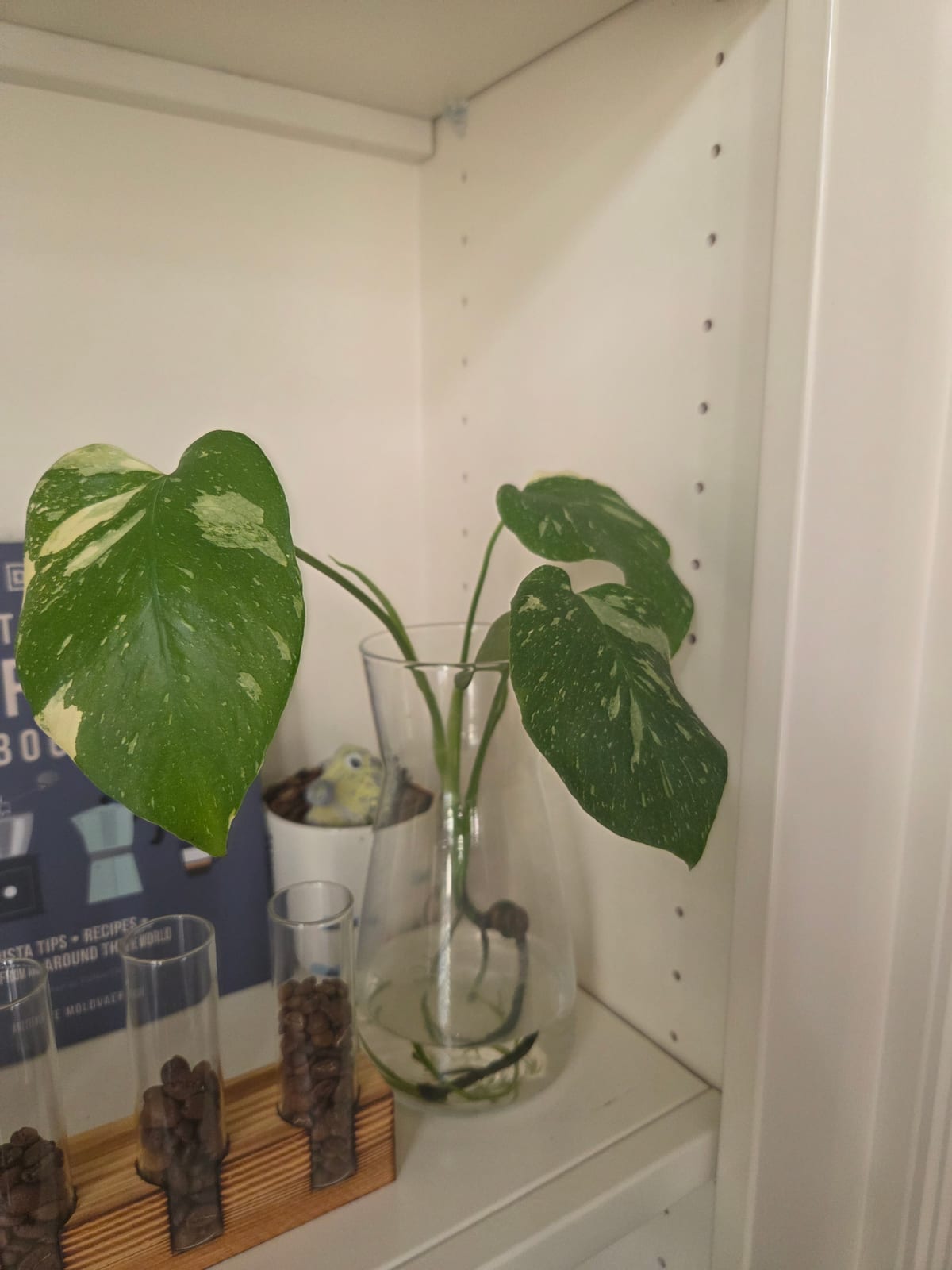
Grow journal · August 21, 2026
Week 5 — Nothing to Do but Wait
Week 3 blamed the repot for what was happening to the Pink Princess. That still looks right, and the plant is a lot worse. The difficult part of this entry is that the correct response to it is to do nothing at all.
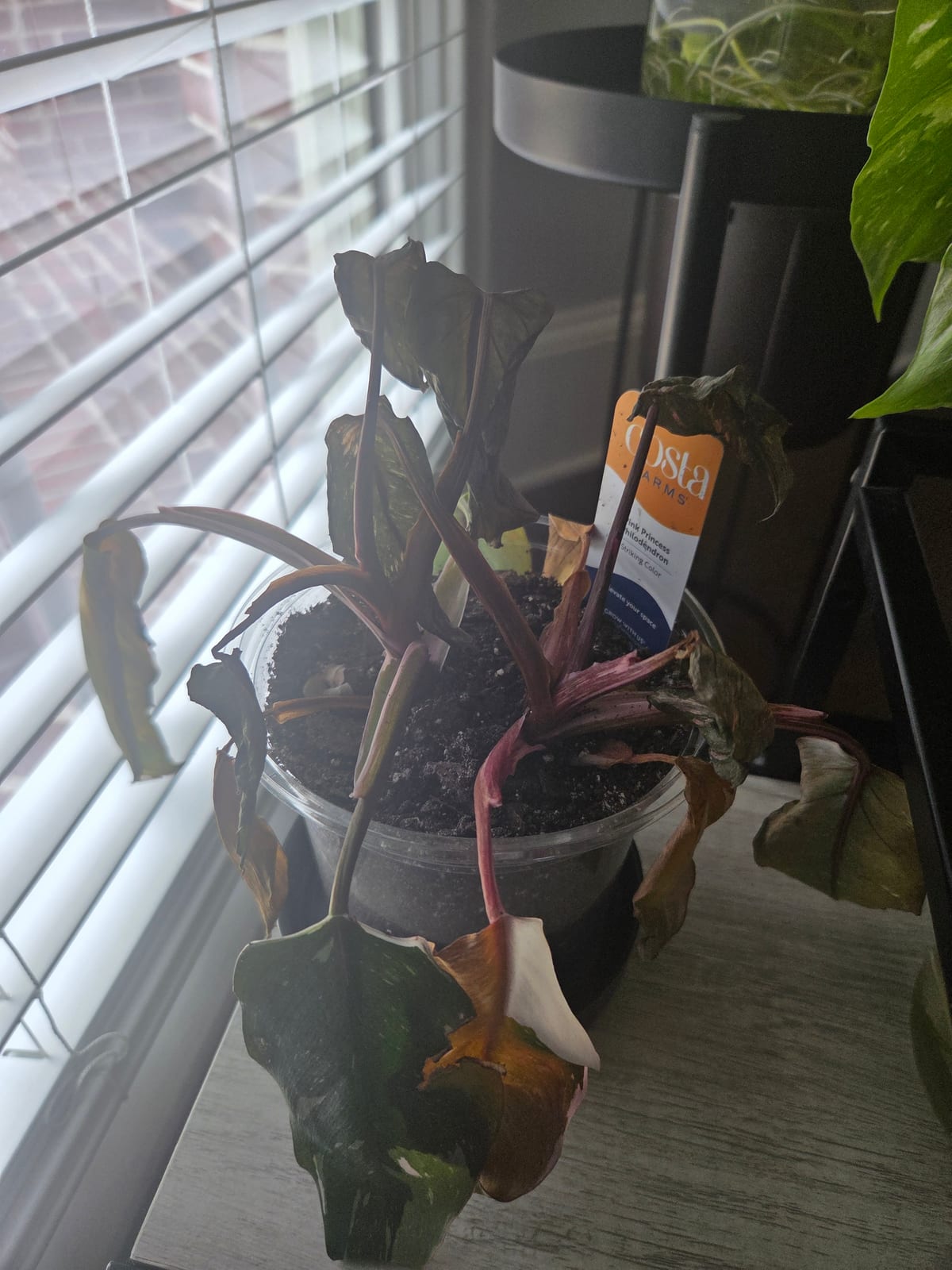
Week 3 ended with a promise that whatever happened to the Pink Princess would get written up either way. It kept declining, so here is the either way.
What the plant is actually doing
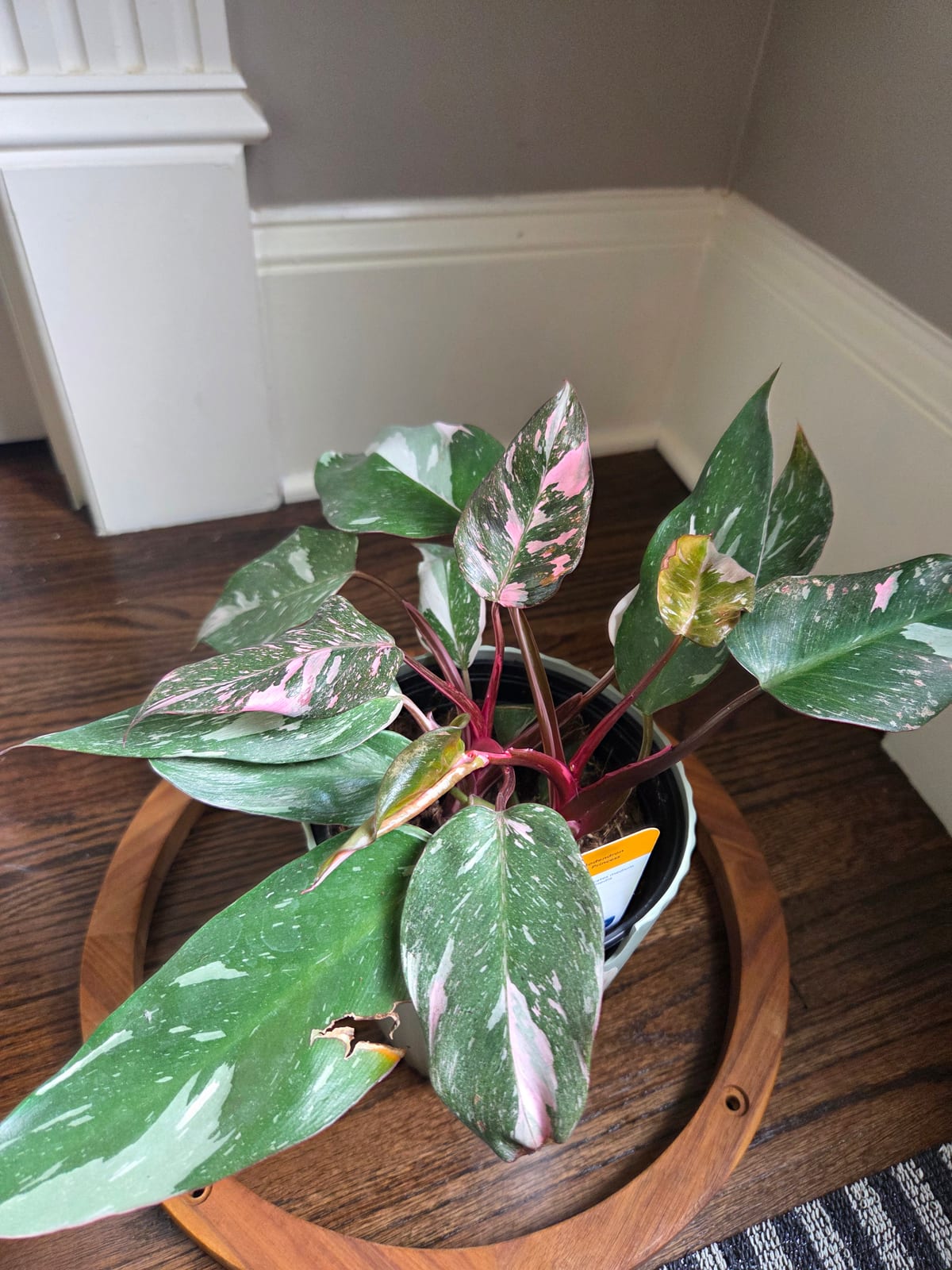
Badly. Worse than Week 3 by a wide margin.
Most of the older leaves have gone from crisping at the margins to fully brown and collapsed. What’s left is a handful of leaves with green still in them and a lot of dead tissue that hasn’t been cut off yet.
Week 3’s reading was that the repot was the injury — that the root hairs doing the actual drinking were lost in the move, and the plant was crisping while its soil stayed damp because it could not drink. Nothing since then contradicts that. It has not been watered again, because the problem was never a shortage of water.
So it sits, and we wait. That is genuinely the whole plan, and the discipline is in not improvising something. Every instinct at this stage — water it, feed it, repot it again into something better — adds a second injury to a plant that is already spending everything it has on rebuilding roots. The only honest signal of recovery is a new leaf from the centre. Not a rehydrated old one; those don’t come back.
If the petiole bases go soft or dark at the soil line, that’s rot, and the answer stops being patience and becomes cuttings. That hasn’t happened.
There is no better version of this update available. A plant that we damaged is sitting on a shelf looking terrible, and the skill being practised this week is leaving it alone.
The Thai Constellation
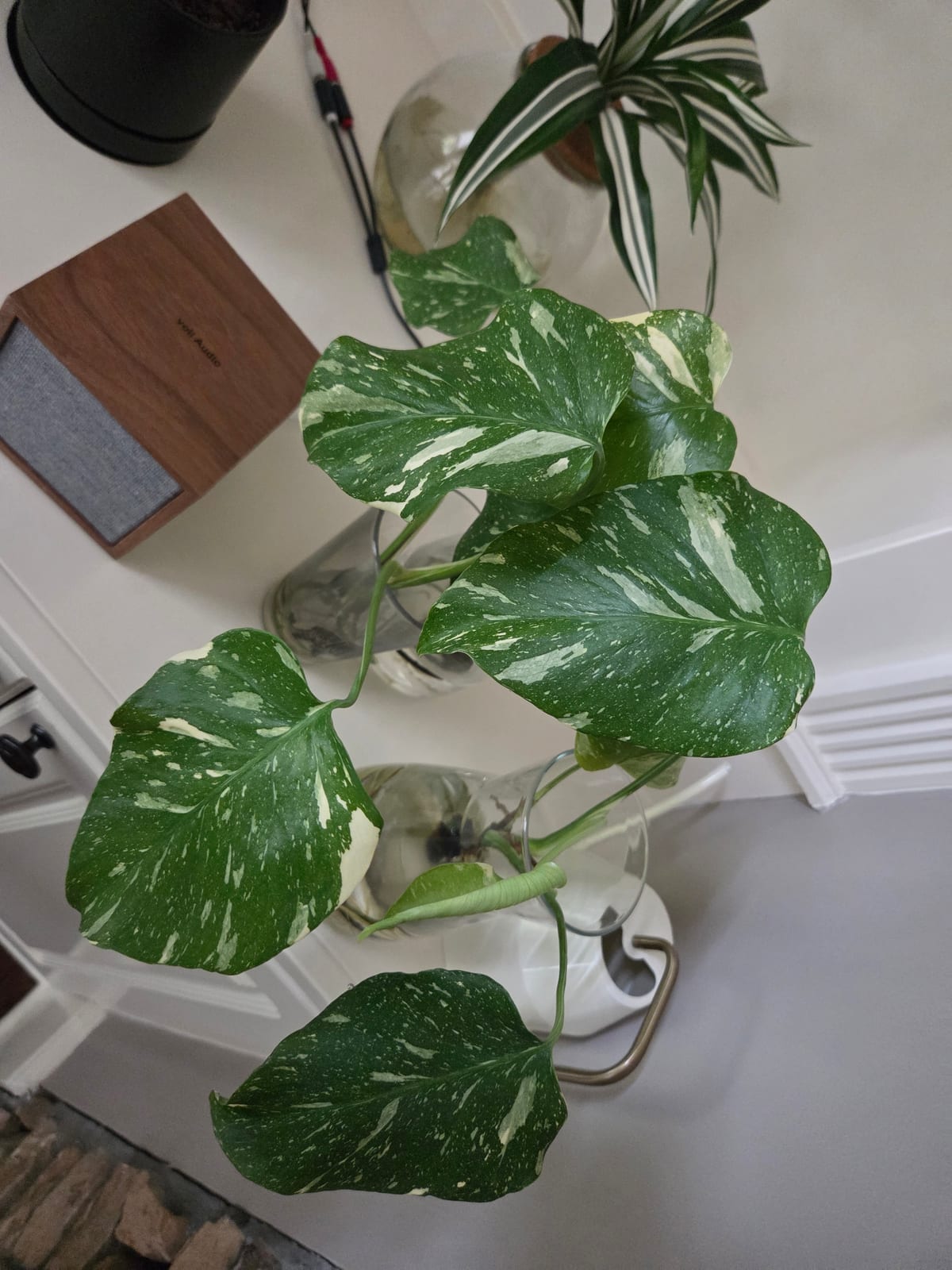
Fine. Still the plant we worried about most and still the one giving us the least trouble.
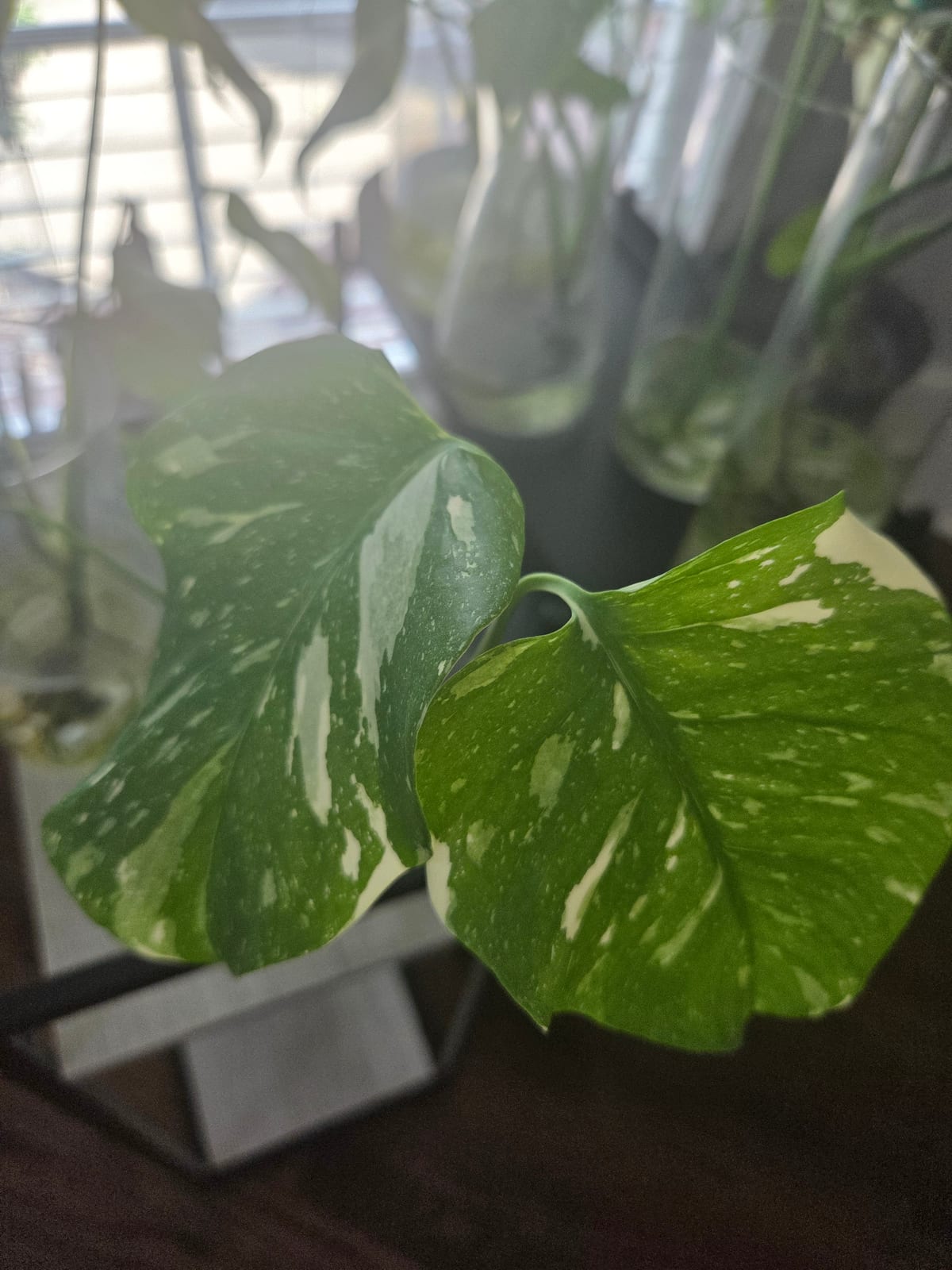
Week 3 promised a report on the new leaf opened, and we’re not going to claim that one. We didn’t mark which leaf was which, so we can’t stand here and tell you the leaf in this photo is the one that was furled at the base three weeks ago. It might be. We don’t know, and a growth record that fills its gaps with the most flattering guess is not a record.
From here the furled leaves get tagged when we spot them, so the next entry can answer the question properly.
The move out of water hasn’t happened either. It’ll get its own entry when it does, because — as the pothos below is currently demonstrating — that transition is a bigger deal than most care sheets admit.
New in the room
Three more plants are now written up on the site that are not part of the business and never will be. They are here because the journal is about the room, and the room is mostly not rare plants.
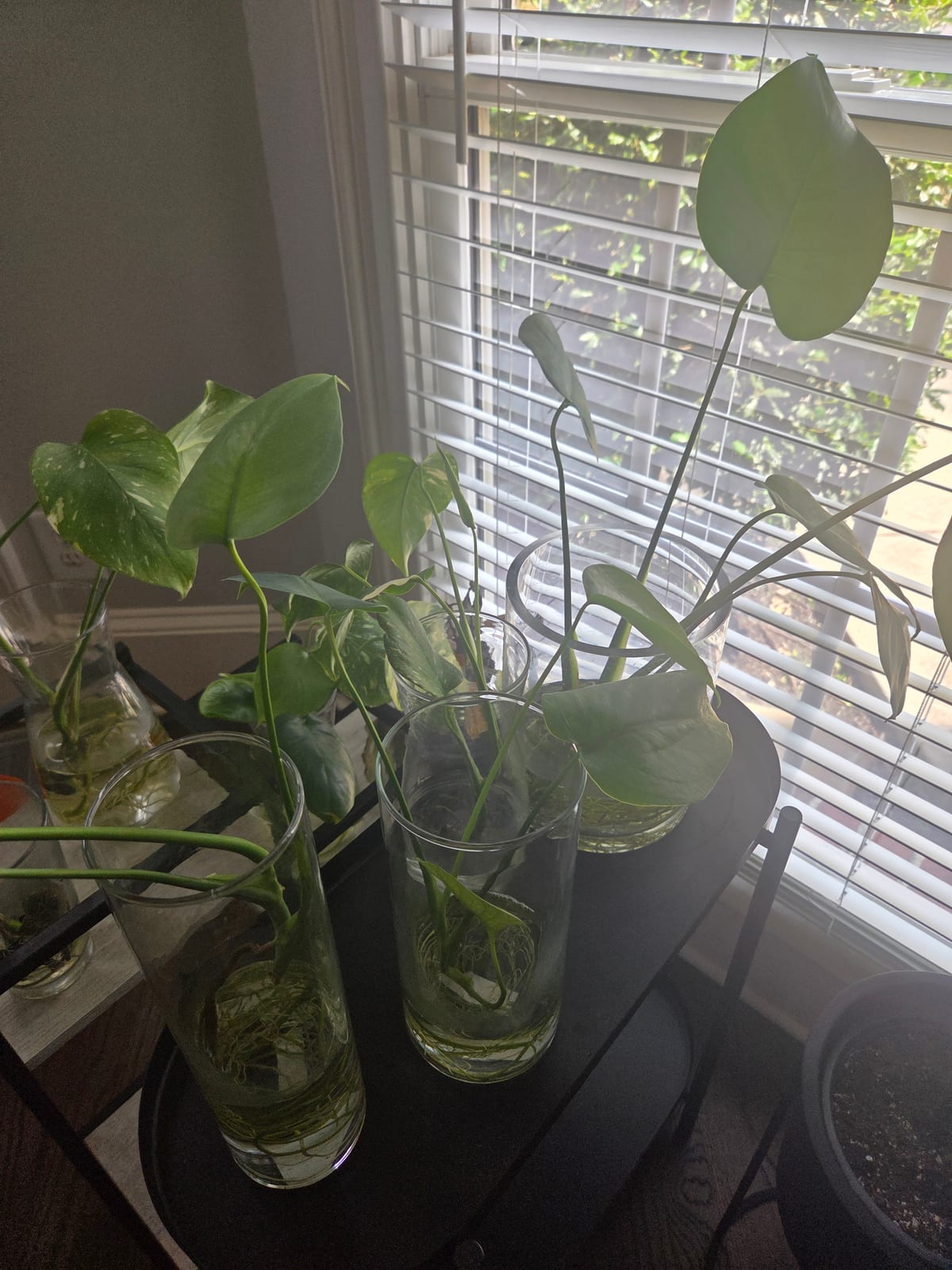
- The pothos jars. Cuttings rooting in plain water, some leaves streaked gold, some blocked with cream. We are deliberately not naming cultivars, and not claiming to know how many separate plants are in there versus cuttings off one vine — we didn’t record it and won’t reconstruct it from memory. What they are good for is watching water roots form in glass, which is a useful thing to have in front of you the same month a repot went wrong upstairs on the shelf.
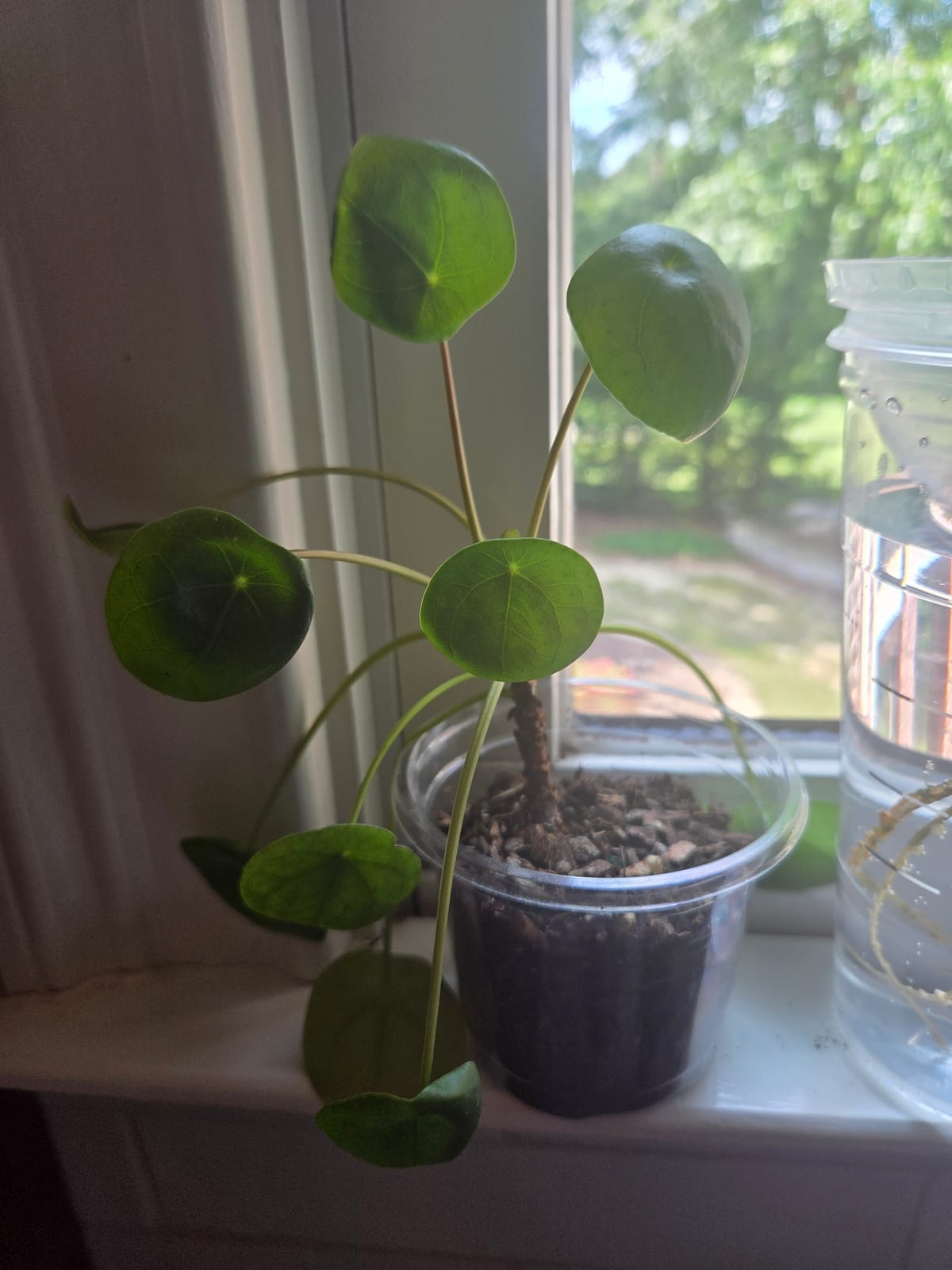
- A Pilea peperomioides, the round-leaved one that spread across Europe for decades entirely by people giving cuttings away rather than by anyone selling it. Grow, share, care — sitting in a pot, having worked that way since long before we put those three words on an About page.
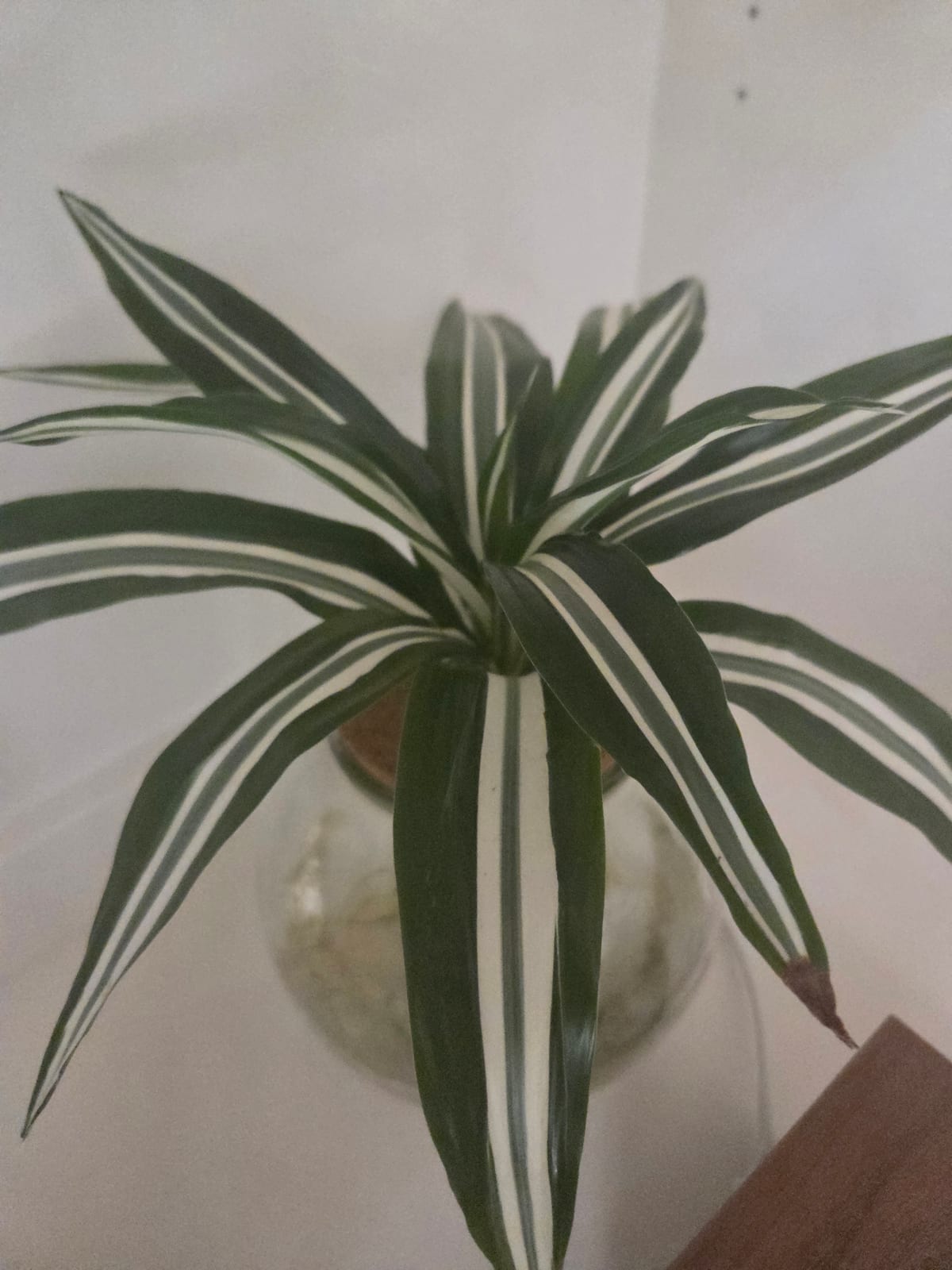
- A striped Dracaena, species not yet pinned down, which is on the shelf partly as a rebuke. When we audited our own Pot Finder logic, the worst bug in it was a condition that skipped dry-preferring plants when generating overwatering warnings — so dracaenas, one of the most reliably drowned houseplants sold anywhere, were coming back with a clean sheet. Having one in front of us keeps that category of mistake physical instead of theoretical.
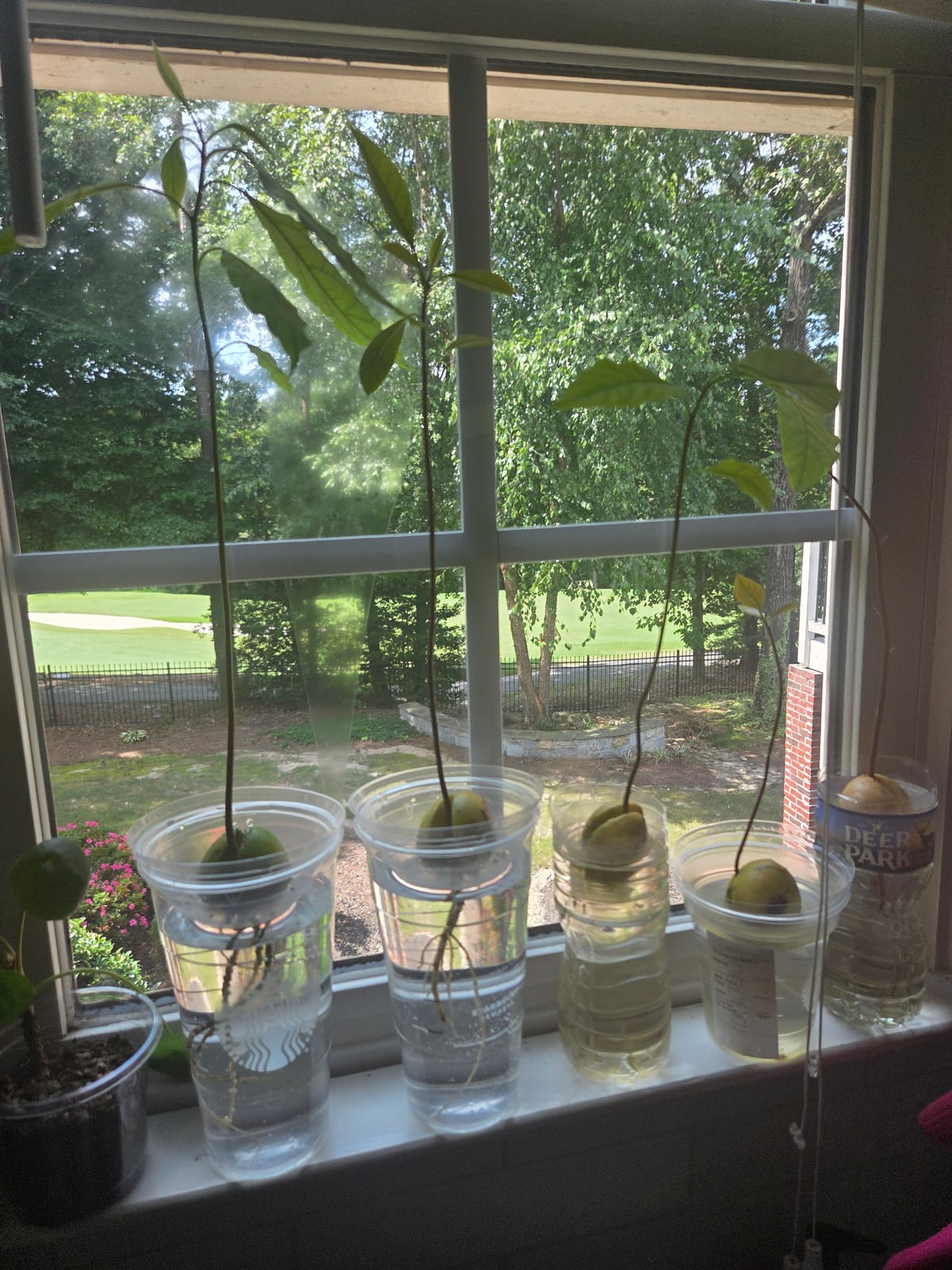
The avocado pits from Week 3 are still going, and there are more of them than there were. Same reason as before: free seeds are a cheap way to keep practising the only skill this whole project runs on.
Next entry
- Whether a new leaf appears from the centre of the Pink Princess, or whether this becomes the entry about cutting losses
- The Thai Constellation’s next leaf, tagged this time so the claim is checkable
- The same shelf, the same angle, both weeks — the compare above is weaker than it should be and that is entirely fixable
- The pothos out of water, if we do it — with the roots photographed before and after, since that’s the part nobody shows
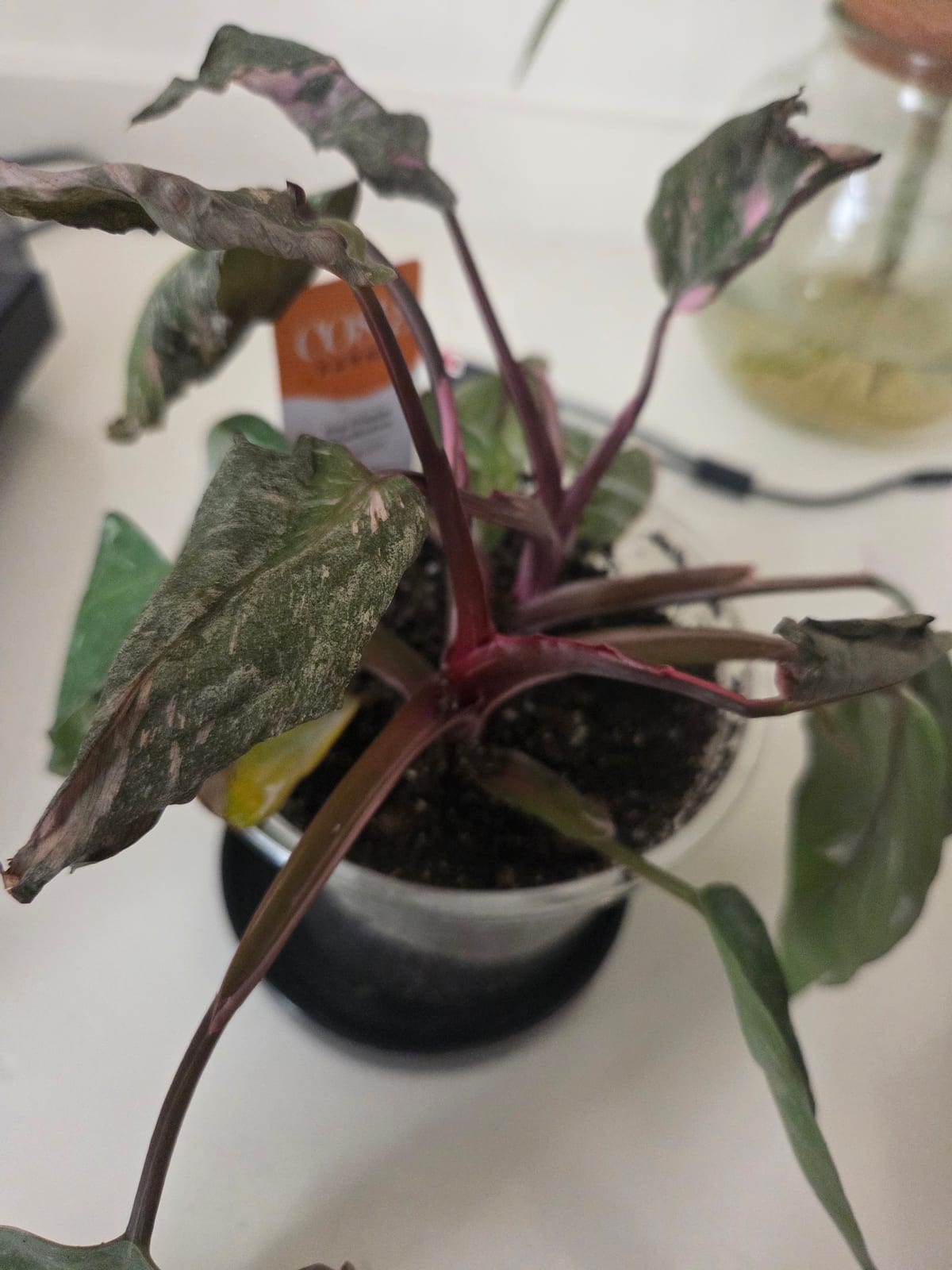 Two weeks ago This week