Grow journal · August 3, 2026
Week 3 — The Pink Princess Is the One in Trouble
We spent Week 1 worrying about the variegated cutting. Two weeks later it has a new leaf, and the plant that was supposed to be the safe one is falling apart.
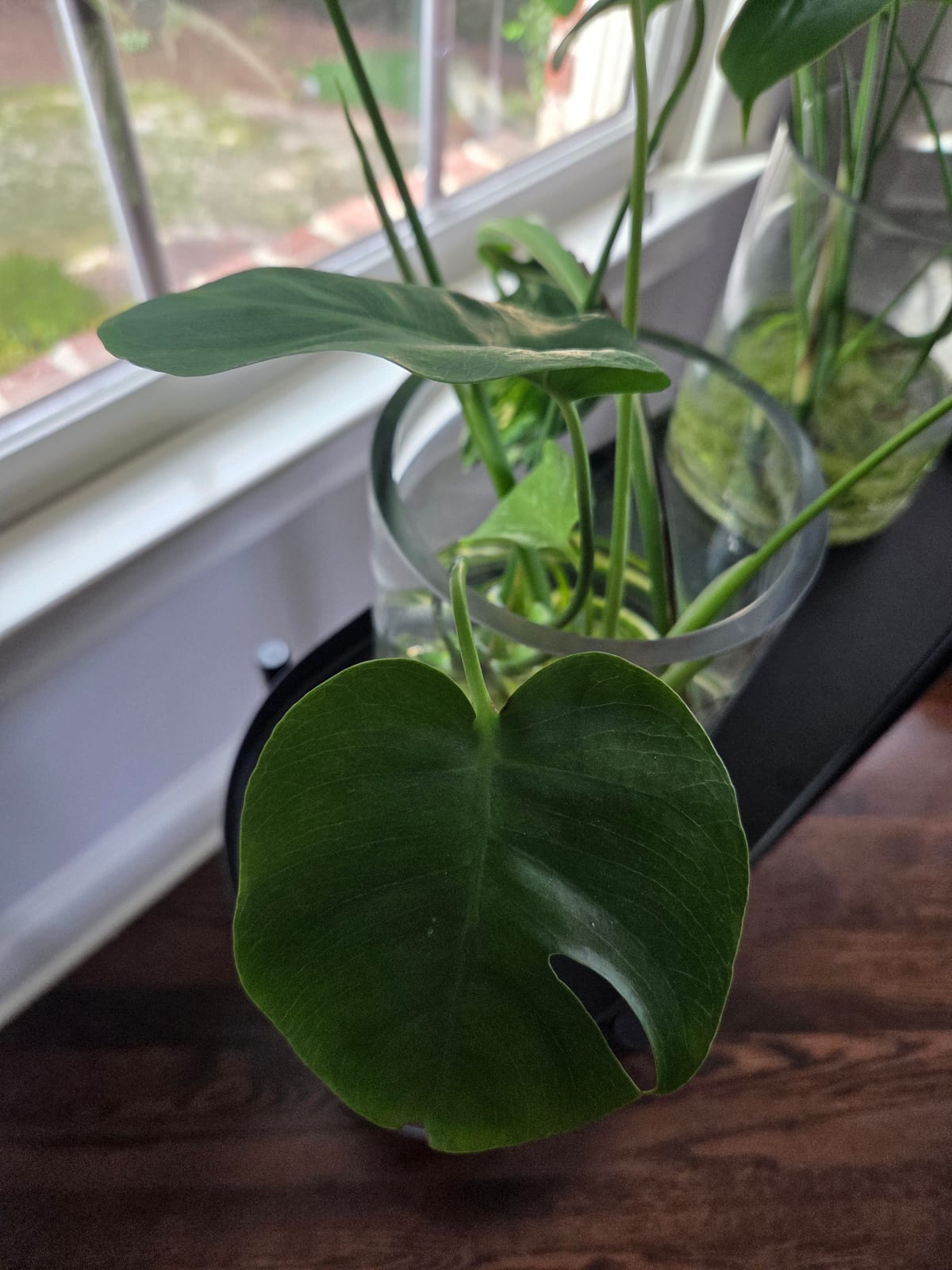
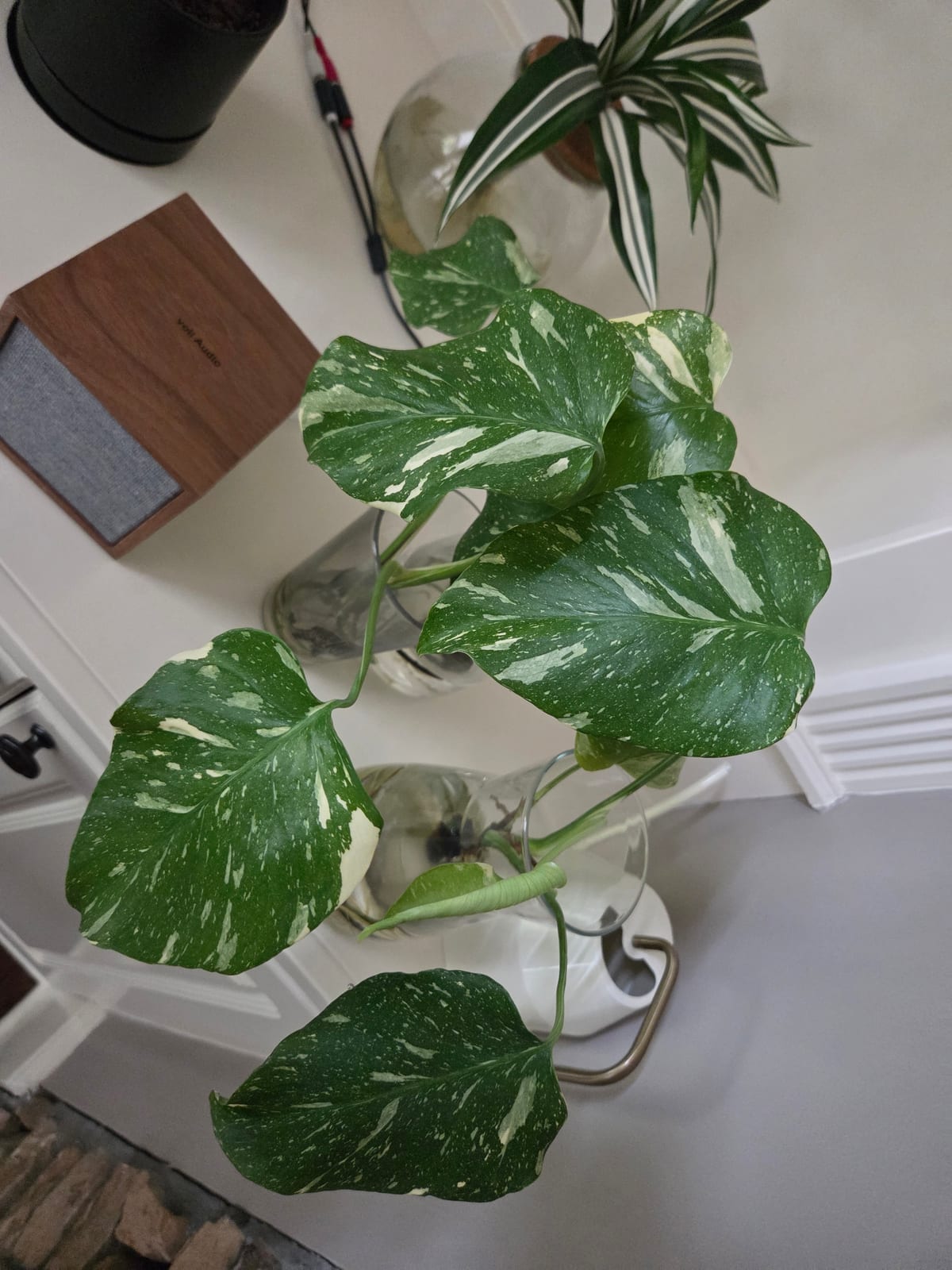
Week 1 set up a straightforward bet. The green Monstera deliciosa was the control, the variegated Thai Constellation was the fragile one, and the potted Pink Princess was the plant already past the risky part — rooted, potted, settled.
Two weeks later that bet looks wrong in both directions.
What changed
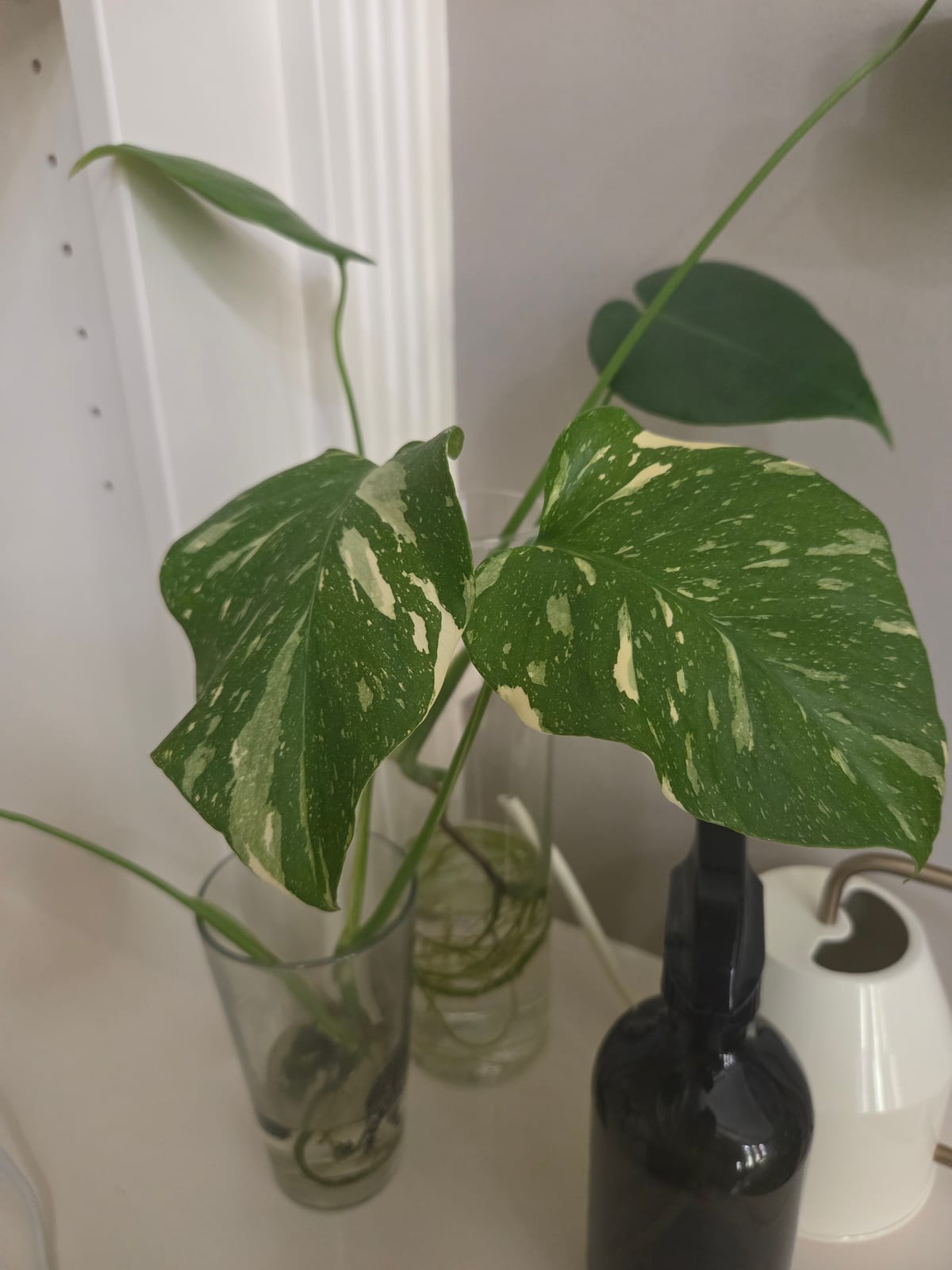
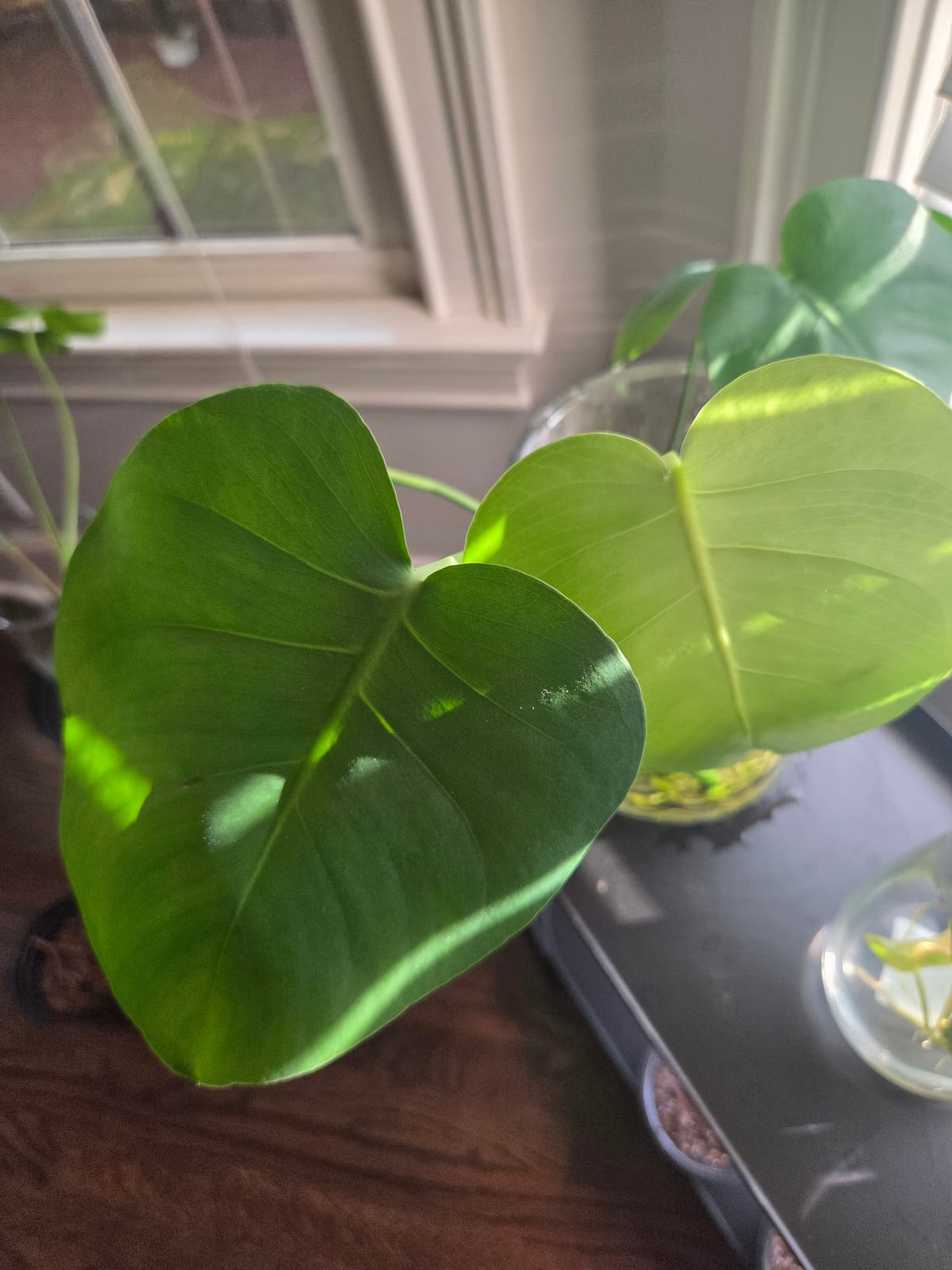
The Thai Constellation is fine. Better than fine — there’s a new leaf furled up at the base of the jar, still rolled tight, and the roots in the water have thickened into a proper tangle rather than the few pale threads they were.
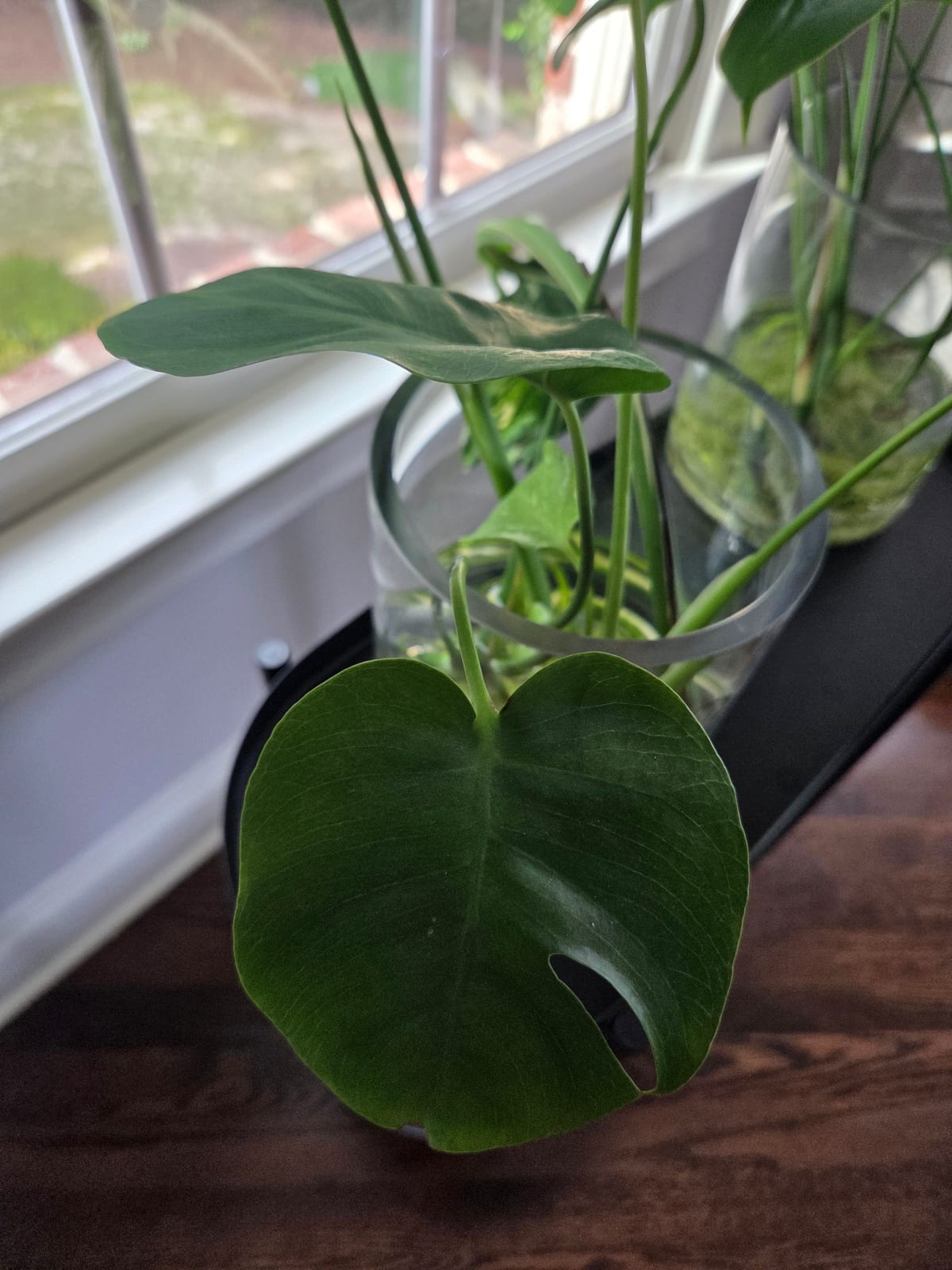
The green Monstera is doing what a control is supposed to do, which is to say nothing worth a photograph. Same steady leaves, same unremarkable roots. That’s the point of it. It tells us the shelf, the water, and the light are not the problem.
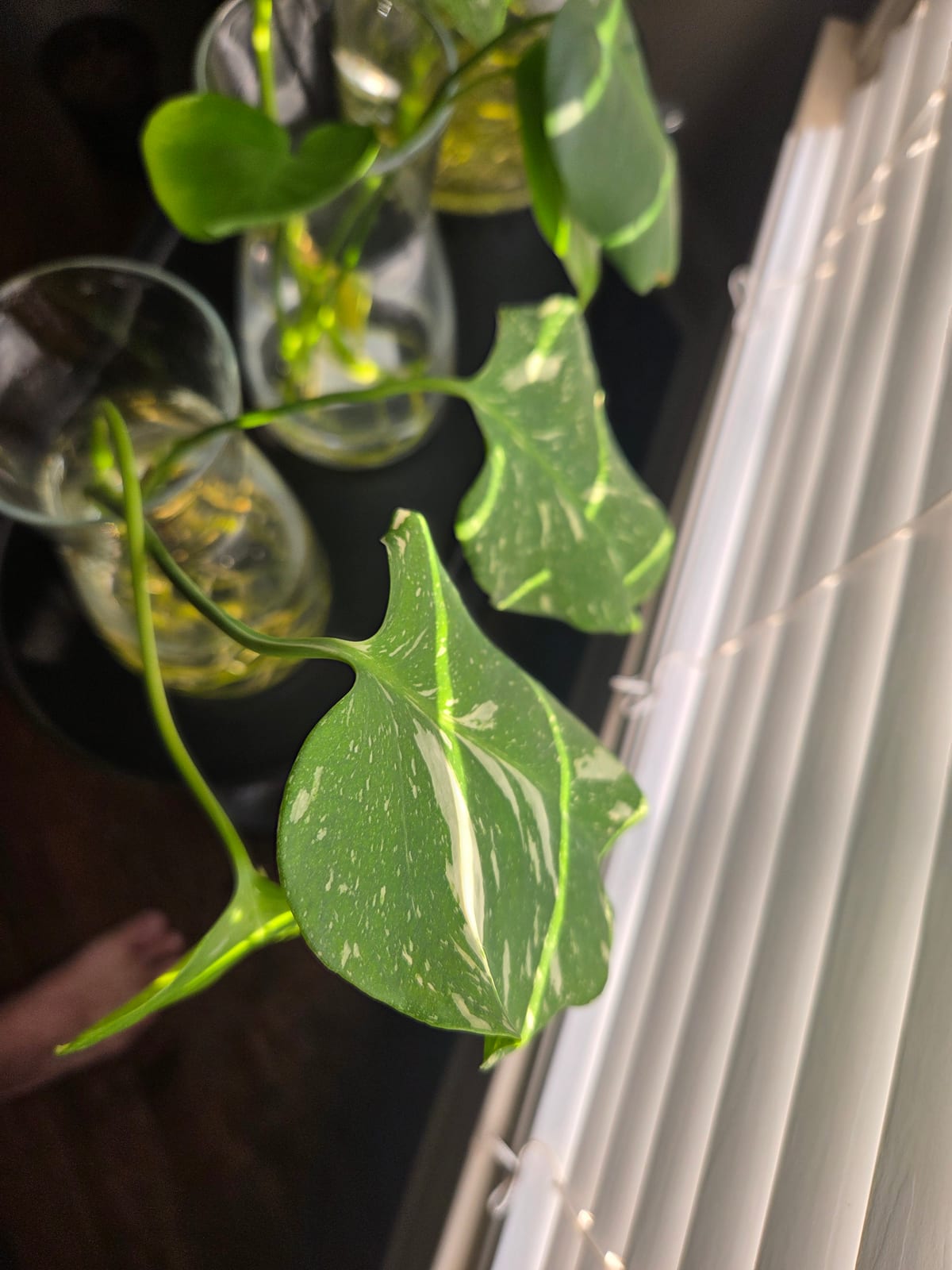
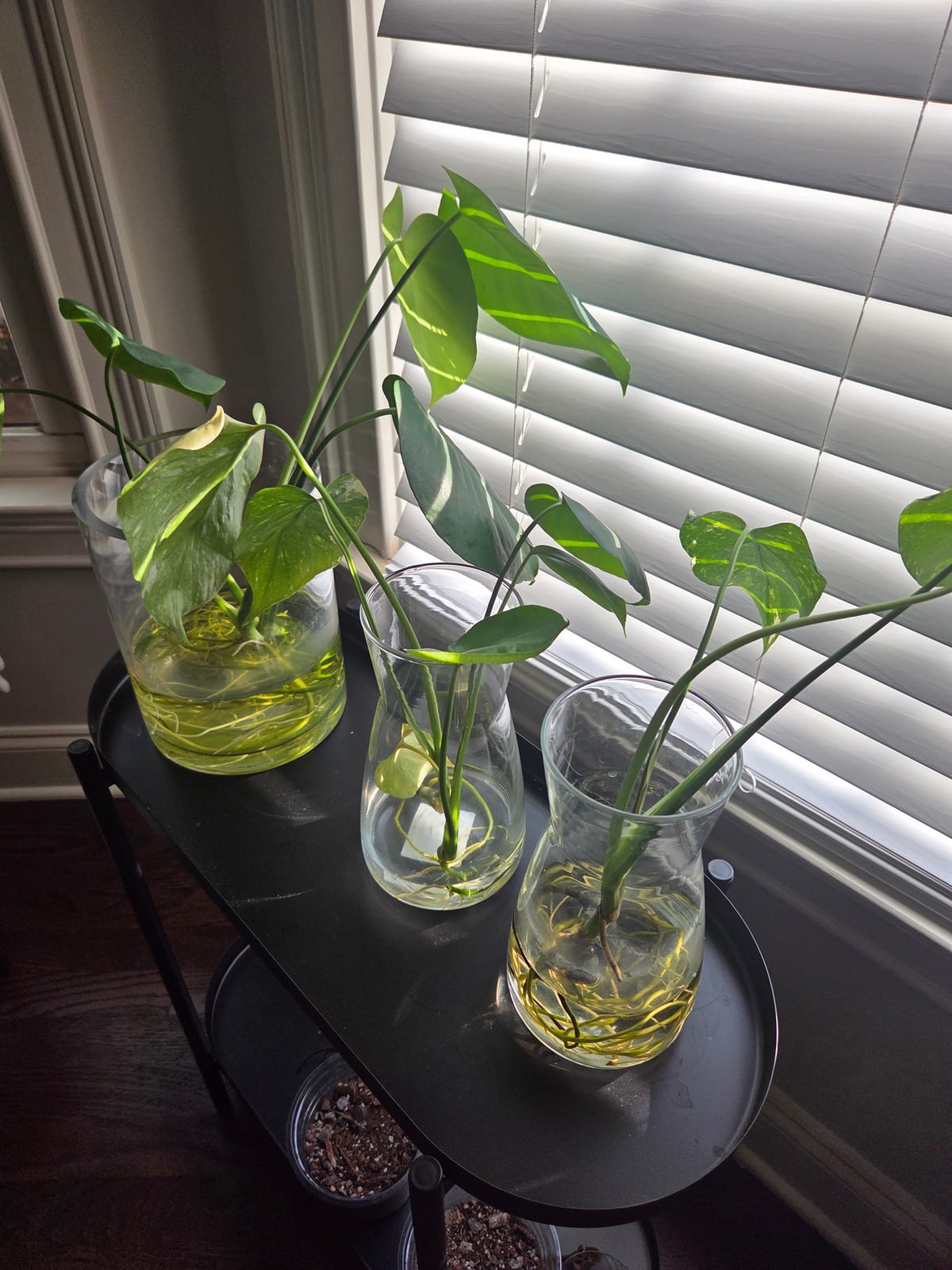
Side by side in the jars, the difference is visible without measuring anything: two of them are packed with roots, one is still mostly clear water. The variegated cutting is slower. It is not failing.
What I got wrong
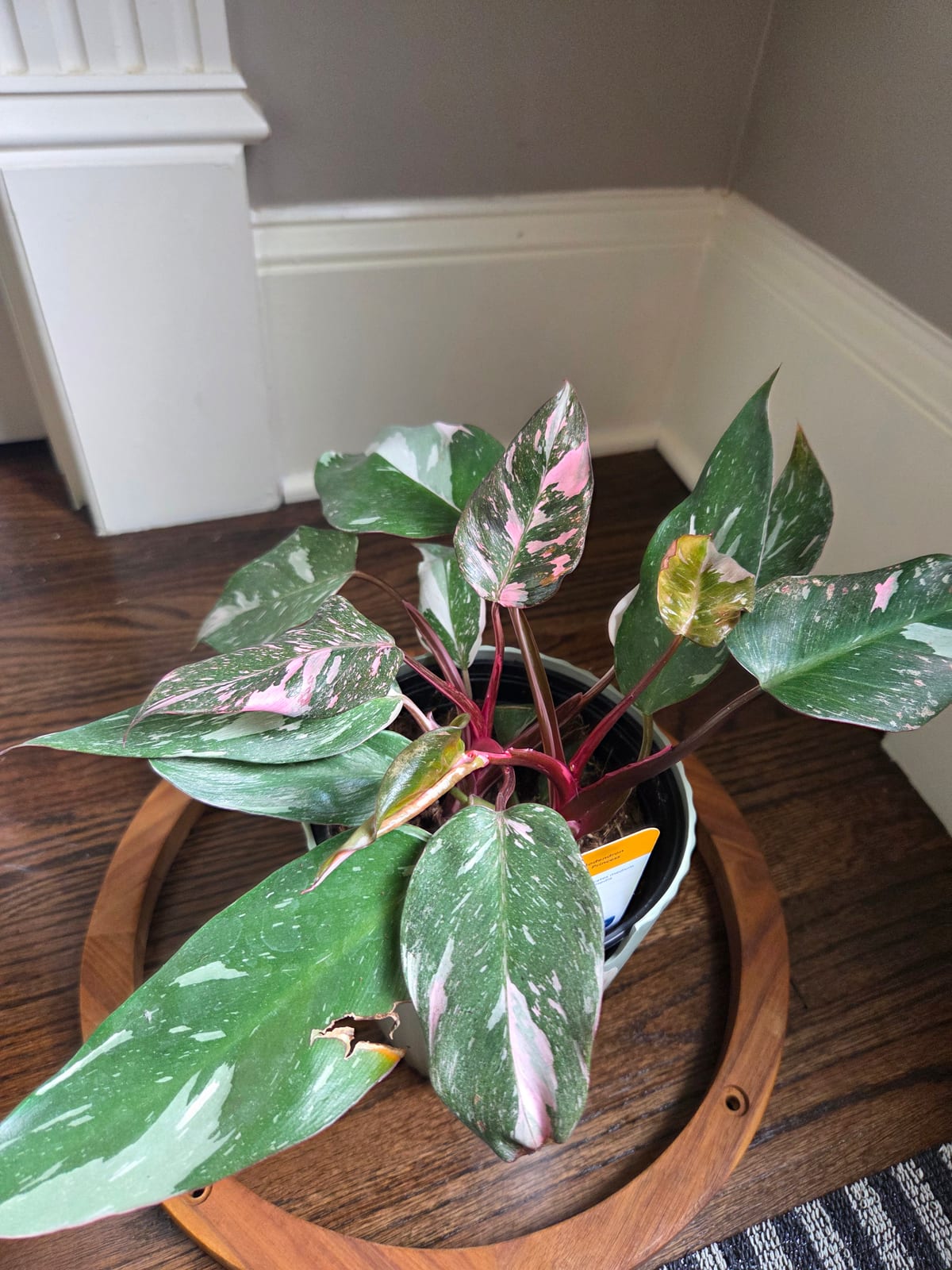
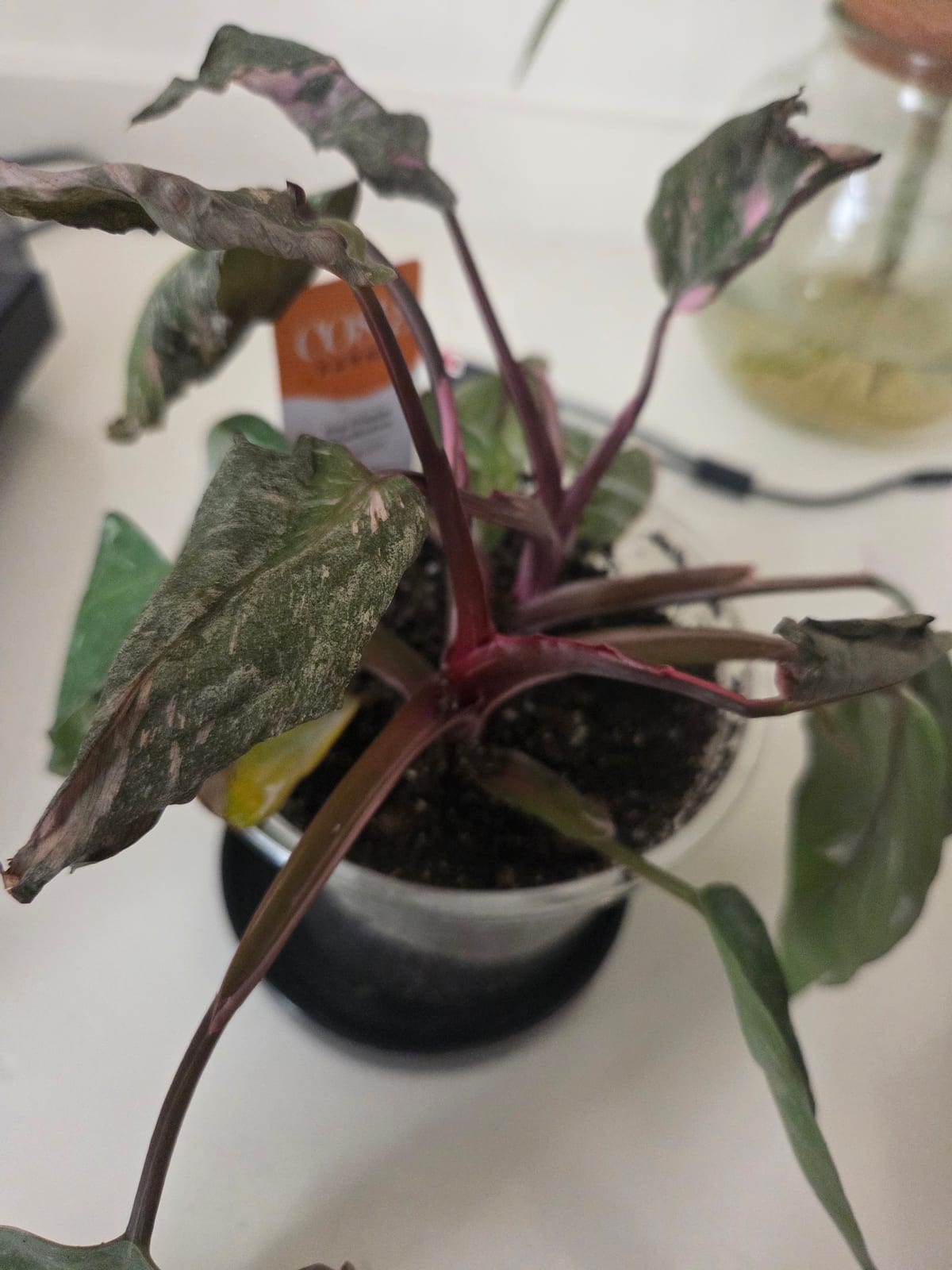
The Pink Princess is the one in trouble, and I did not see it coming.
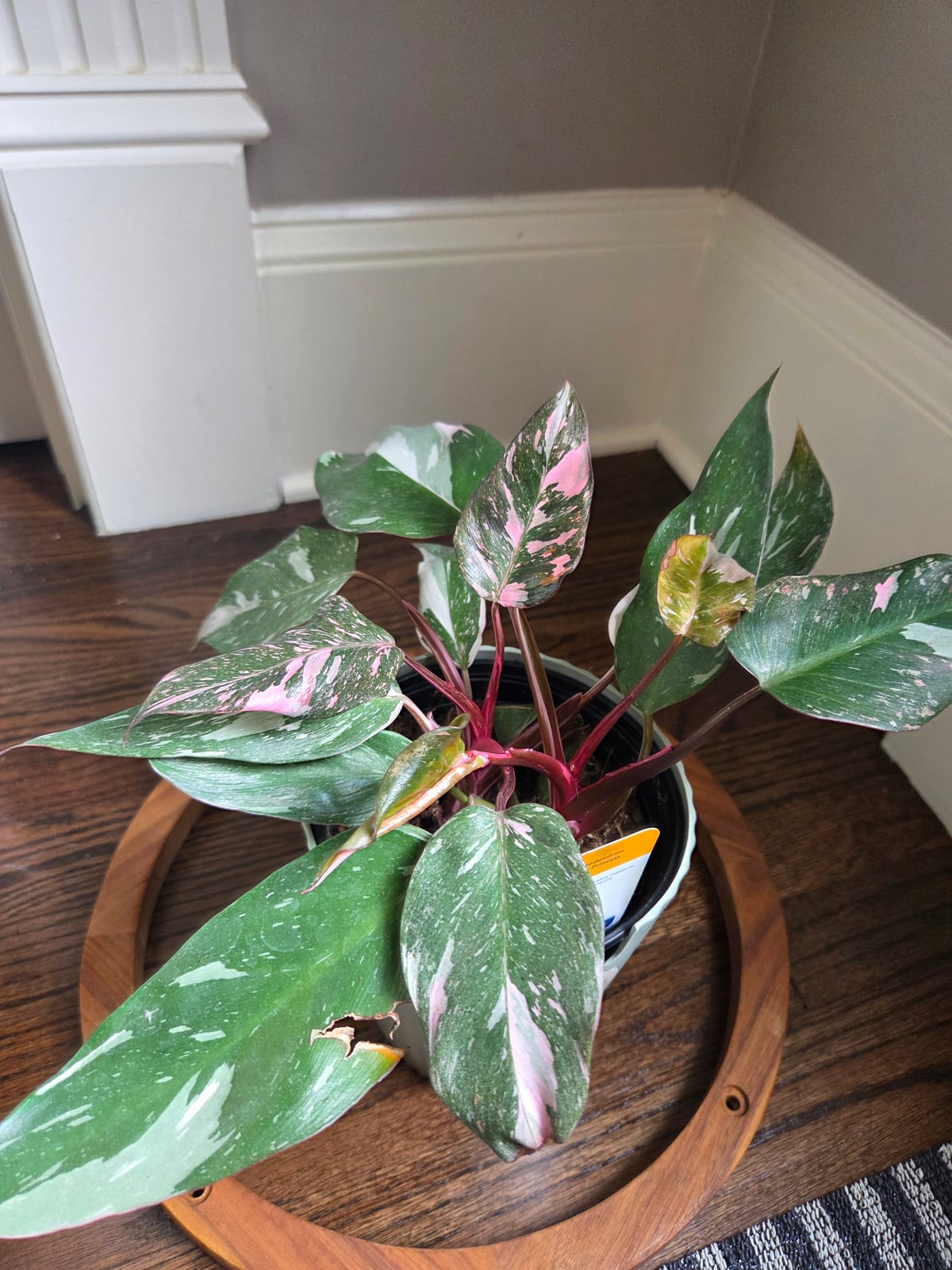
Two weeks ago it was turgid and flat-leaved with clean pink sectors. Now the leaves are curling inward, the tips and margins have gone brown and papery, and several of the older leaves are crisping from the edge in. This is not a slow fade — it happened inside one two-week gap.
The honest position is that I don’t yet know which of these it is:
- Underwatering or an inconsistent schedule. Curling plus crisp brown margins is the classic signature.
- Light. It’s the one plant sitting under a lamp rather than beside a window. Too close, and you get exactly this.
- Humidity. Same room as the jars, but the jars sit in their own humid microclimate and the pot doesn’t.
- Something at the roots that the pot has been hiding — which is the argument Week 1 made for water propagation, now pointed back at me.
I have since done the thing the last item on that list points at: I took it out of the pot and looked.
The roots were not the horror I had braced for — nothing black, nothing that smelled, nothing sloughing off in my hand. So I tidied them up, moved the plant into fresh substrate, and left it alone. The drying started after that.
Which means the honest list above is missing its most likely entry, and the entry is me. I have not watered it since, because the substrate still has not dried out — two weeks on, it is damp when I put a finger in it. A plant crisping at the edges while its soil stays wet is not a thirsty plant. Either the mix is holding more water than these roots can move, or I left it with less root than I thought I did. From the outside I cannot yet tell which, and guessing in public is how you end up repeating someone else’s care sheet instead of your own notes.
There’s a lesson in the ordering here. I gave the expensive, obviously fragile cutting daily attention and gave the healthy potted plant none, because it looked like it didn’t need any. The plant that gets checked is the plant that survives.
Meanwhile, on the windowsill
Four avocado pits, all from kitchen scraps, all sitting in water on the window. One has thrown a stem and a set of leaves. Two have rooted with no shoot yet. One has done nothing and is probably done.
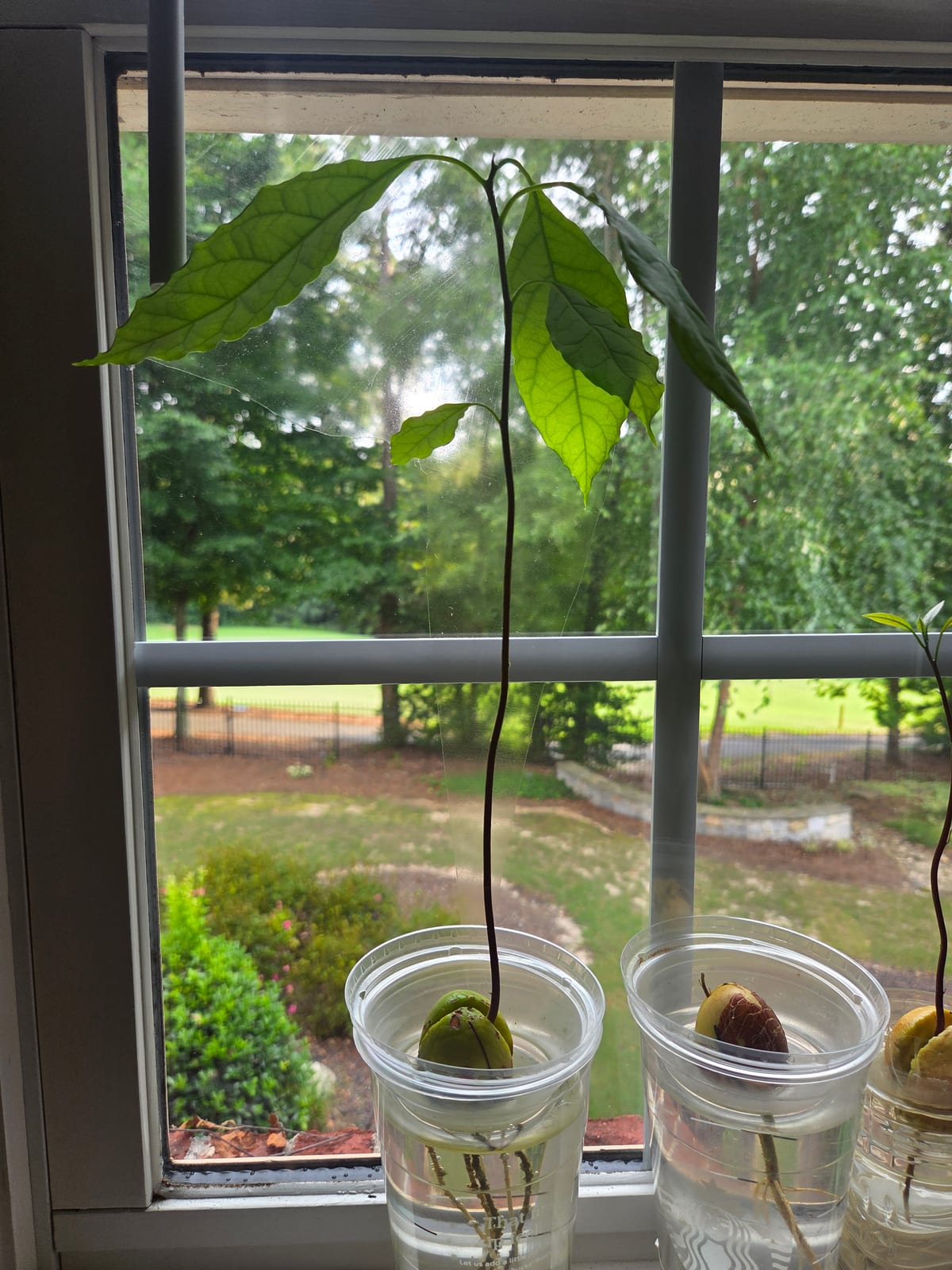
They aren’t for sale and never will be. They’re here because a one-in-four strike rate on free seeds is a cheap way to keep practising the only skill this whole project runs on: noticing what a plant is doing before it becomes obvious.
Next entry
- Whether the Pink Princess stabilises or keeps declining — either way it gets written up
- The Thai Constellation’s new leaf, opened
- The first move out of water, if the roots are ready
Week 1 said a journal that only reports successes is an ad. Here’s the first test of that.
 Two weeks ago
  This week
  Two weeks ago
  This week